

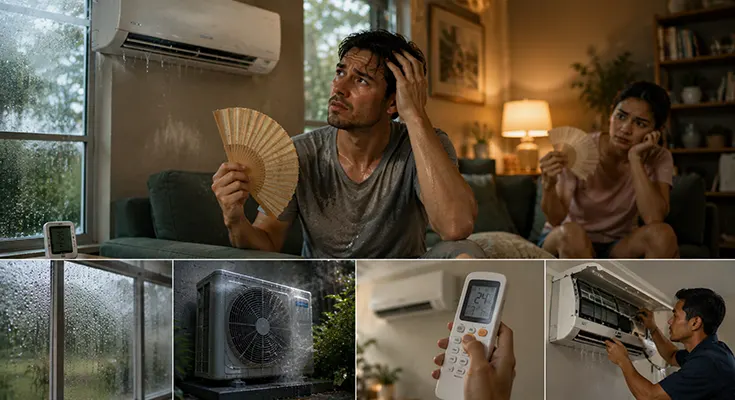
If you live in a humid climate, keeping your home comfortable can take more than simply lowering the thermostat. High humidity can make indoor spaces feel warmer, force your air conditioner to work harder, and affect how effectively the system maintains a comfortable environment. Understanding the connection between humidity and cooling performance can help homeowners know when routine maintenance is enough and when ac repair for Louisiana homes may be needed.
Humidity is the amount of moisture present in the air. During warm weather, outdoor air can contain a significant amount of moisture, and some of that moisture can enter your home. Your air conditioner plays an important role in managing both temperature and indoor humidity, so problems with either part of the system can affect overall comfort.
Why Humidity Matters for Indoor Comfort
Temperature isn’t the only factor that determines how comfortable a room feels. When the air contains a lot of moisture, sweat doesn’t evaporate from your skin as efficiently. As a result, you may feel warmer and more uncomfortable even when the thermostat shows a temperature that would normally feel reasonable.
This is why a humid room can feel noticeably different from a dry room at the same temperature.
An air conditioner helps address this by removing heat from indoor air while also allowing moisture to condense as the air passes over the system’s cooling coil. The resulting moisture is collected and drained away.
When the system is operating properly, this process helps create a cooler and more comfortable indoor environment.
How Your Air Conditioner Removes Moisture
An air conditioner’s primary job is to cool your home, but moisture removal happens as part of the cooling process.
Warm indoor air passes over a cold evaporator coil. As the air cools, moisture can condense on the coil and collect as water. That water then leaves the system through a drain.
This means an air conditioner has to operate under the right conditions to manage humidity effectively. If the system isn’t running long enough, has a restricted airflow, or has another performance problem, it may not remove moisture as efficiently as it should.
The result can be a home that feels cool but still noticeably damp.
Signs Your Home May Have Excessive Indoor Humidity
Sometimes the signs of high humidity are obvious, while other indications can be easier to miss.
You may notice condensation on windows, a damp or clammy feeling indoors, or rooms that seem warmer than the thermostat setting suggests. Musty odors can also indicate that moisture levels are higher than they should be.
Other warning signs may include:
- Persistent condensation around windows or other cool surfaces.
- A noticeable damp feeling on furniture, bedding, or fabrics.
- Musty odors that return even after cleaning.
- Rooms that feel uncomfortable despite the air conditioner running.
- Visible moisture or signs of dampness around the home.
These symptoms don’t automatically mean your air conditioner is malfunctioning. Indoor humidity can also be influenced by ventilation, leaks, cooking, showers, insulation, and other sources of moisture. However, persistent humidity is worth investigating.
How High Humidity Can Affect Air Conditioner Performance
High humidity can create a cycle in which your air conditioner has to work harder to maintain comfortable conditions.
When indoor air contains a lot of moisture, the system needs to remove both heat and moisture. If the equipment is struggling with either task, it may run for longer periods without producing the comfort you expect.
A system that runs continuously but never seems to make the home comfortable may have an underlying problem. Restricted airflow, a dirty filter, a dirty coil, refrigerant issues, drainage problems, or an improperly sized system can all affect performance.
In some cases, the issue may not be the equipment itself. A home with poor insulation, air leaks, or excessive sources of indoor moisture can place additional demands on the cooling system.
Why Short Cycling Can Be a Problem
An air conditioner needs sufficient operating time to cool the home and remove moisture effectively. If the system switches on and off frequently, it may not run long enough to complete the dehumidification process efficiently.
Short cycling can have several possible causes. An oversized air conditioner may cool the space quickly without running long enough to remove sufficient moisture. A thermostat problem, restricted airflow, or another mechanical issue can also contribute.
If your system repeatedly starts and stops during normal operation, it’s worth having the cause investigated rather than assuming it’s simply a sign that the unit is powerful enough.
The Importance of Proper Airflow
Airflow plays an important role in both temperature control and humidity management.
A clogged air filter can restrict the amount of air moving through the system. Dirty components can also interfere with heat transfer and overall performance.
Replacing or cleaning the filter according to the manufacturer’s recommendations is one of the simplest ways to support proper airflow. However, changing the filter won’t solve every airflow problem.
Blocked ductwork, damaged ducts, blower issues, or other mechanical problems may require professional attention.
If certain rooms consistently feel warmer or more humid than others, uneven airflow could be part of the problem.
Can an Air Conditioner Be Too Large?
Many homeowners assume that a larger air conditioner will provide better cooling, but oversized equipment can sometimes create comfort problems.
A system that is too large for the home may reach the desired temperature quickly and shut off before it has enough time to remove a significant amount of moisture. The thermostat may show a comfortable temperature while the room still feels humid.
Proper sizing takes several factors into account, including the home’s size, insulation, windows, layout, climate, and other characteristics. An accurately sized system can provide more consistent cooling and humidity control than simply choosing the largest available unit.
Ways to Help Manage Indoor Humidity
Your air conditioner isn’t the only tool available for controlling indoor moisture. Everyday habits can also make a difference.
Use exhaust fans when showering or cooking to remove moisture from the home. Make sure bathroom and kitchen ventilation systems are working properly, and address plumbing leaks promptly.
Keeping doors and windows closed while the air conditioner is running can also help prevent humid outdoor air from entering unnecessarily.
If humidity remains high despite normal air conditioner operation, a dedicated dehumidifier may be worth discussing with an HVAC professional. In some homes, it can provide additional moisture control without requiring the air conditioner to handle the entire burden.
When to Have Your Air Conditioner Checked
If your home feels unusually humid even when the air conditioner is running, don’t automatically assume the thermostat needs to be lowered.
Persistent humidity can sometimes point to an equipment or airflow issue. If the system is running constantly, short cycling, producing unusual noises, failing to cool certain rooms, or leaving excessive moisture indoors, professional evaluation can help identify the cause.
It’s also wise to address unusual changes early. A cooling system that is gradually becoming less effective may be easier to diagnose and repair before a minor issue develops into a larger failure.
Conclusion
Humidity has a direct effect on how comfortable your home feels and how your air conditioner performs. A properly functioning cooling system removes heat while also helping reduce moisture, but several factors can interfere with that process.
High indoor humidity, frequent cycling, restricted airflow, poor system sizing, and mechanical problems can all affect comfort. Simple maintenance and good ventilation can help, but persistent humidity or declining cooling performance deserves professional attention.
By paying attention to how your home feels rather than relying only on the thermostat, you can spot potential problems earlier and keep your air conditioning system working more effectively throughout the warm and humid months.