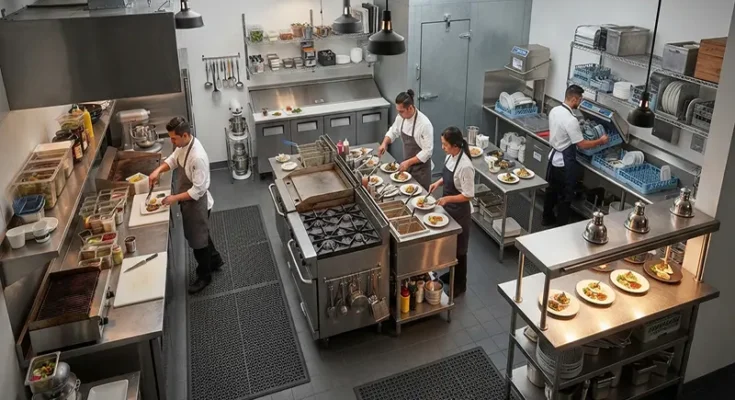
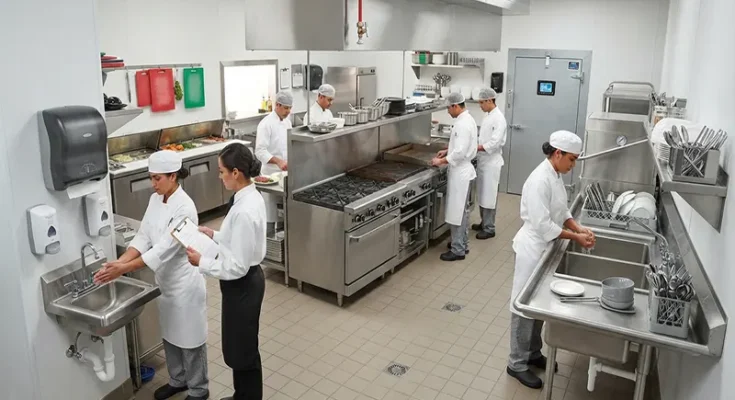
Essential Safety and Health Code Guidelines for Commercial Kitchen Design

Essential Safety and Health Code Guidelines for Commercial Kitchen Design

Opening a restaurant is an exhilarating venture, but it is also one of the most heavily regulated business environments in existence. The line between a thriving grand opening and a devastating, costly delay often boils down to a single document: the local health department inspection report.

Many first-time restaurateurs make the mistake of designing a beautiful kitchen layout first and attempting to retrofit health and safety codes later. This approach is a recipe for catastrophic fines, delayed permits, and forced structural rebuilds. By baking safety, hygiene, and building codes directly into your initial architectural layout, you protect your capital investment and safeguard the health of your staff and guests. Here are the essential safety and health code guidelines every commercial kitchen must follow.

Guideline 1: HACCP Flow and Cross-Contamination Prevention

Health inspectors evaluate your kitchen layout through the lens of Hazard Analysis Critical Control Point (HACCP) principles. The golden rule …

Essential Safety and Health Code Guidelines for Commercial Kitchen Design Read More
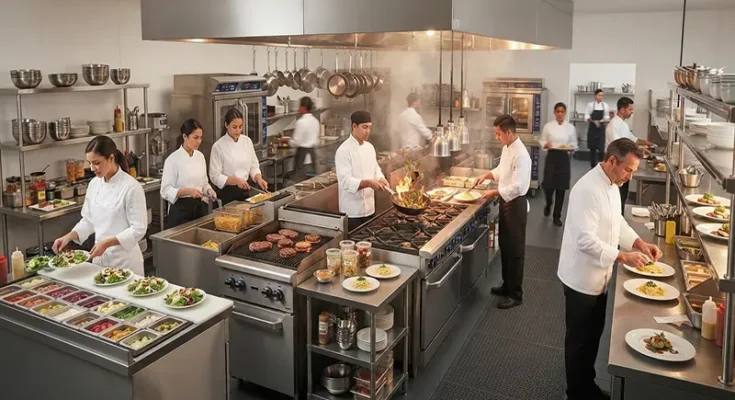
Modern Open Restaurant Kitchen Design Ideas for Customer Experience

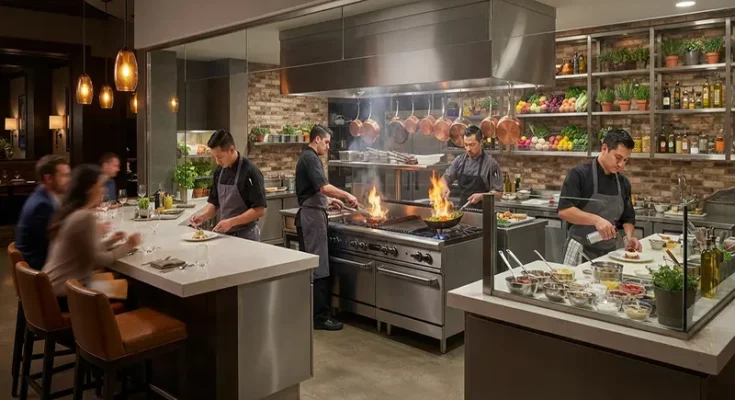
Modern Open Restaurant Kitchen Design Ideas for Customer Experience

For decades, restaurant architecture was defined by strict segregation: the dining room was a polished sanctuary of hospitality, while the kitchen was a hidden industrial fortress tucked behind swinging doors. Diners enjoyed the final product without ever seeing the sweat, fire, and orchestration required to make it.

Today, dining culture has completely transformed. Modern diners crave authenticity, connection, and culinary theater. They want to see the sear on the steak, hear the sizzle of the pan, and witness the raw craftsmanship behind their meal. By tearing down the physical walls between the back-of-house and front-of-house, an open kitchen turns food preparation into an immersive, unforgettable customer experience. Here is how to design an open kitchen that elevates trust, ambiance, and profitability.

The Psychology of Transparency: Building Trust and Appetite

Opening your kitchen to the dining room does more than just look trendy—it fundamentally rewires the psychological connection between your guests …

Modern Open Restaurant Kitchen Design Ideas for Customer Experience Read More
Commercial Restaurant Kitchen Line Layouts That Maximize Cook Speed

Commercial Restaurant Kitchen Line Layouts That Maximize Cook Speed

In the restaurant industry, peak service is a high-stakes ballet. When the dining room is fully packed and tickets begin streaming continuously out of the kitchen printer, every single second counts. Shaving even 30 seconds off an average ticket time can dramatically increase table turns, boost customer satisfaction, and drive higher nightly revenue.

While many operators try to solve slow ticket times by pushing their line cooks to work faster, human speed has a hard limit. The true ceiling on your kitchen’s velocity isn’t staff hustle—it is architectural design. If your cooking line layout forces cooks to cross paths, stretch across aisles, or walk across the room for ingredients, your kitchen will bottleneck no matter how skilled your team is. Optimizing your line layout for maximum speed transforms your kitchen into a high-performance engine.

The Anatomy of a High-Velocity Cooking Line

At the heart of every fast, efficient commercial kitchen …

Commercial Restaurant Kitchen Line Layouts That Maximize Cook Speed Read More
How to Design an Efficient Small Restaurant Kitchen Floor Plan

How to Design an Efficient Small Restaurant Kitchen Floor Plan

In the restaurant industry, the kitchen is the engine room of your entire business. When you are operating in a compact footprint—whether running a tight-knit neighborhood bistro, a boutique cafe, or a fast-casual spot—every single square inch dictates your ticket times, labor costs, and food quality.

While a sprawling kitchen offers room for error, a small kitchen demands architectural precision. In tight quarters, poor layout choices result in crossed paths, delayed orders, and stressed-out staff. The secret to small kitchen success isn’t wishing for more square footage; it is designing an intelligent, high-performance floor plan that turns spatial limits into a streamlined engine.

The Golden Rule: Mastering the Workflow Triangle

An efficient kitchen isn’t just about where equipment sits—it is about how your staff moves through space. The classic commercial kitchen workflow is built on five core zones: Storage, Prep, Cooking, Plating, and Dishwashing.

  • Minimizing Cross-Traffic: In a small kitchen,
How to Design an Efficient Small Restaurant Kitchen Floor Plan Read More
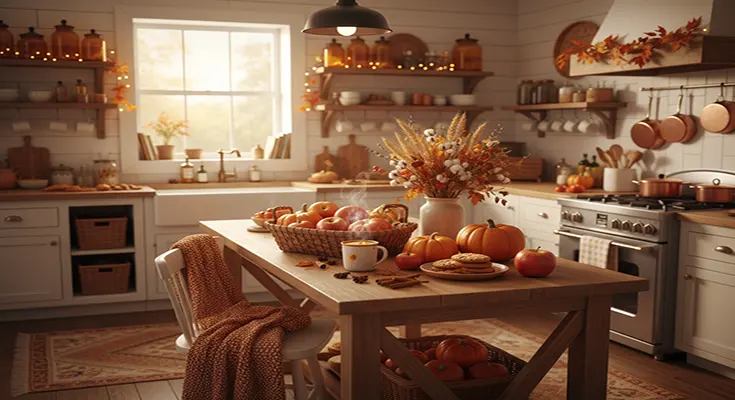
Cider and Spice: Best Fall Kitchen Decorating Ideas for a Cozy Atmosphere

Cider and Spice: Best Fall Kitchen Decorating Ideas for a Cozy Atmosphere

As the weather cools, the kitchen naturally shifts from a light, airy summer space to the heart of the home, filled with the aroma of hearty baking and warm comfort foods. Achieving a truly inviting, cozy atmosphere requires more than just lighting a candle—it demands engaging all the senses through color, texture, and scent.

Here are the best fall kitchen decorating ideas for a cozy atmosphere, focusing on small, high-impact changes that welcome autumn warmth.

1. Color Palette: Warmth and Depth

Move away from the cool pastels and bright whites of summer. Fall decorating is about embracing deep, saturated colors that mimic the turning leaves and harvest bounty.1

  • Embrace Jewel Tones: Introduce accents of burnt orange (like terracotta), deep burgundy (or cranberry red), forest green, and rich gold or mustard yellow.
  • Strategic Placement: Since you won’t be painting the whole kitchen, use these colors in small,
Cider and Spice: Best Fall Kitchen Decorating Ideas for a Cozy Atmosphere Read More