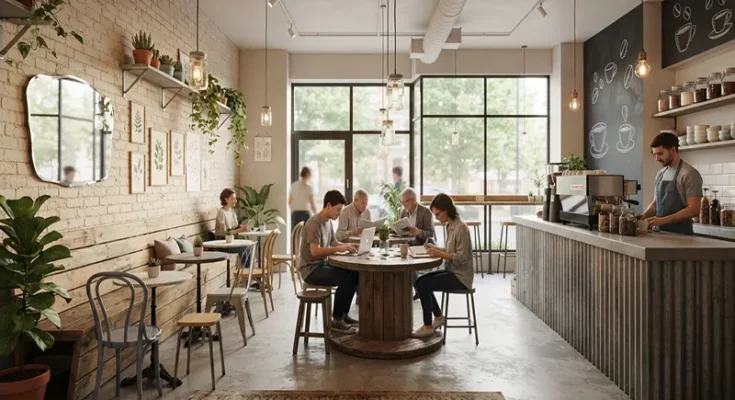
Affordable Cafe Interior Design Ideas for Small Budget Coffee Shops

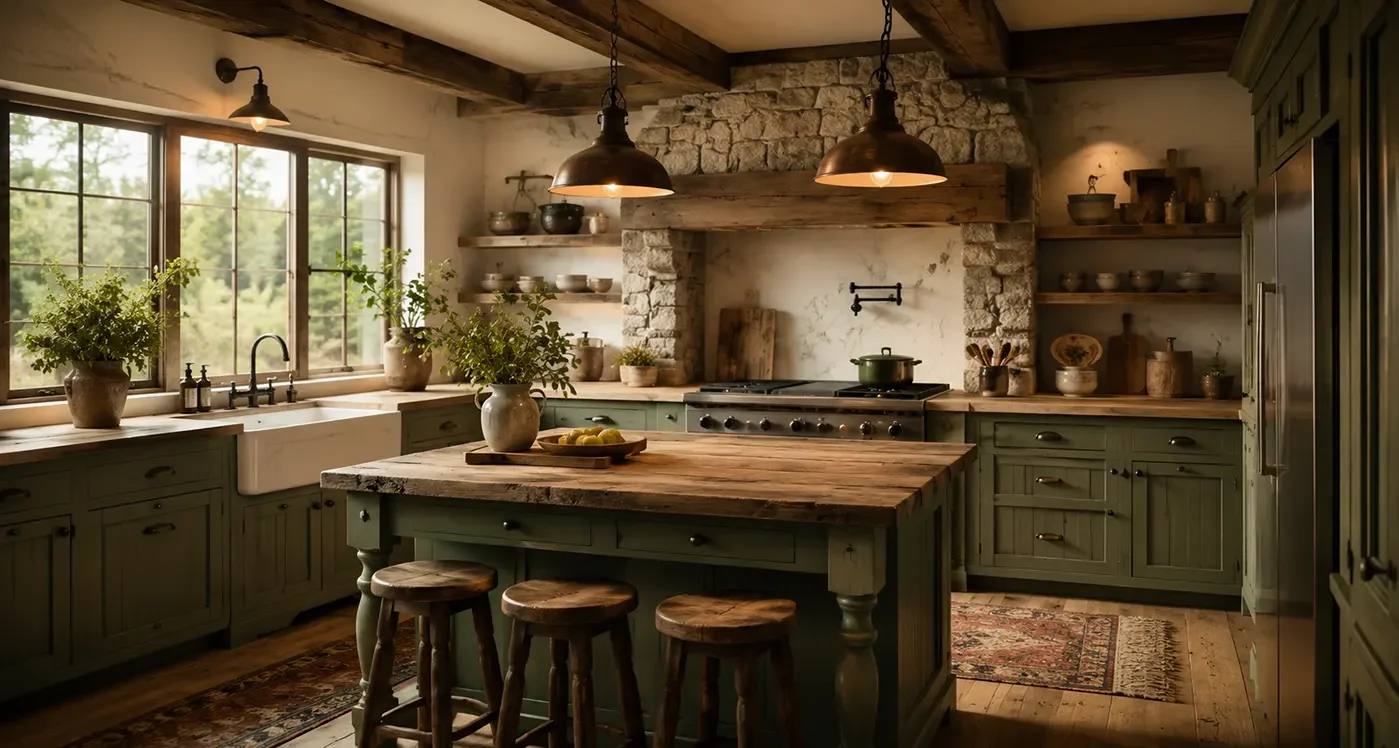
Affordable Cafe Interior Design Ideas for Small Budget Coffee Shops

Opening an independent coffee shop is a dream shared by many, but the financial reality is stark. Between espresso machine leases, initial inventory, commercial licensing, and contractor fees, capital can vanish before you even pour your first latte.

Many aspiring operators assume that a stunning, Instagram-worthy interior requires a six-figure design budget. That is a myth. In the world of commercial hospitality, creativity, resourcefulness, and smart material choices will always outperform a bottomless bank account. You do not need a luxury budget to create a memorable, soul-filled space; you just need a strategic design playbook. Here is how to create a high-impact cafe interior on a shoestring budget.

Strategy 1: Strategic Paint and Color Blocking

When capital is tight, paint is your single most powerful and cost-effective design tool. A few gallons of high-quality paint can completely transform the spatial perception of a room overnight.

  • Embracing Warm Neutrals: Ditch harsh
Affordable Cafe Interior Design Ideas for Small Budget Coffee Shops Read More
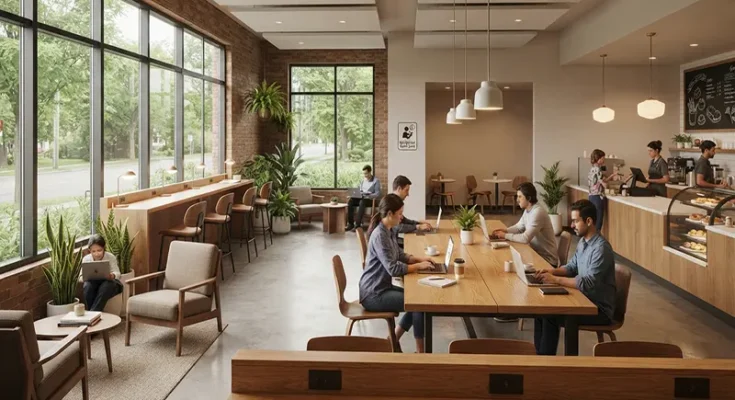
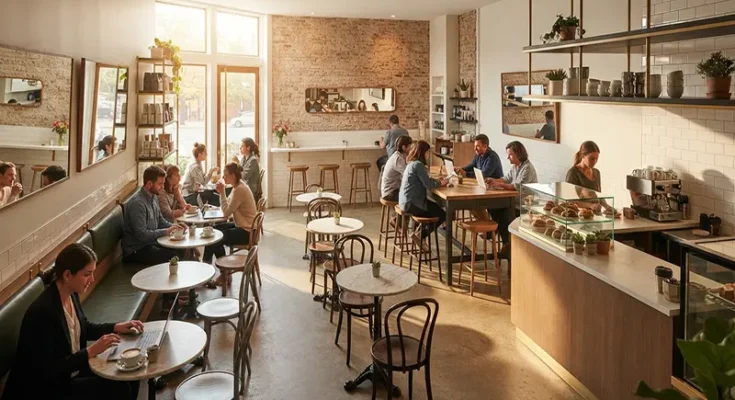
How to Design a Work-Friendly Cafe for Laptop Users and Remote Workers

How to Design a Work-Friendly Cafe for Laptop Users and Remote Workers

The modern professional landscape has changed permanently. With millions of freelancers, entrepreneurs, and remote workers untethered from traditional office cubicles, the local coffee shop has evolved into the ultimate “third space.”

However, for independent cafe owners and interior designers, catering to laptop users often sparks a contentious debate: How do you welcome remote workers who want to camp out for hours without sacrificing table turnover, hourly revenue, and profitability?

The answer is not banning laptops; it is intentional design. By creating a spatial ecosystem specifically engineered for remote workers, you can capture this lucrative crowd, build fierce customer loyalty, and protect your bottom line. Here is how to design a work-friendly cafe that balances productivity with hospitality.

The Economics of the Laptop Crowd

Many cafe operators fear the “squatter customer”—the person who buys a single drip coffee and occupies a four-top table for five hours straight.

  • Reframing the Customer:
How to Design a Work-Friendly Cafe for Laptop Users and Remote Workers Read More
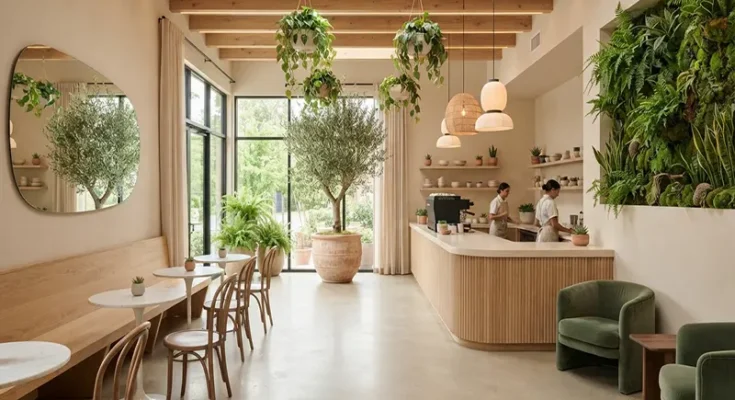
Modern Minimalist Cafe Design Ideas with Warm Biophilic Elements

Modern Minimalist Cafe Design Ideas with Warm Biophilic Elements

For years, commercial coffee shop design was dominated by cold, sterile aesthetics—stark white walls, exposed industrial steel, and hard concrete that felt more like a laboratory than a sanctuary. While sleek, minimalist spaces photograph well, they often fail to make customers want to sit, linger, and savor their morning brew.

The modern hospitality landscape has evolved. Today’s cafe-goers crave spaces that feel restorative, grounded, and emotionally welcoming. The secret lies in a powerful design synthesis: marrying the clean, uncluttered lines of modern minimalism with the organic, living warmth of biophilic design. Here is how to design a cafe interior that balances architectural simplicity with natural soul.

The Philosophy of Warm Minimalism in Hospitality

True minimalism is not about stripping a space of its personality or making it feel uncomfortable; it is about intentional editing.

  • The Shift from Cold to Warm: Clinical minimalism relies on high-contrast blacks, bright whites, and
Modern Minimalist Cafe Design Ideas with Warm Biophilic Elements Read More
How to Maximize Seating in a Small Cafe Interior Layout

How to Maximize Seating in a Small Cafe Interior Layout

For independent cafe owners and boutique coffee shop operators, every square foot carries a direct financial weight. In the hospitality industry, revenue is fundamentally tied to capacity and customer turnover. Yet, opening a cozy neighborhood cafe often means dealing with a compact, narrow, or awkwardly shaped footprint.

When space is at a premium, the temptation is often to cram as many tables and chairs into the room as possible. However, overcrowding backfires: cramped layouts choke staff workflow, make customers feel uncomfortable, and ruin the relaxed ambiance that draws people in. The secret to maximizing seating isn’t about reducing personal space to a minimum—it is about intelligent, strategic layout design that turns architectural limitations into an intimate, high-yield environment.

Understanding the Balance: Capacity vs. Customer Comfort

Before moving a single piece of furniture, you must understand the delicate tension between guest capacity and spatial ergonomics.

  • The Danger of Overcrowding: Packing too
How to Maximize Seating in a Small Cafe Interior Layout Read More
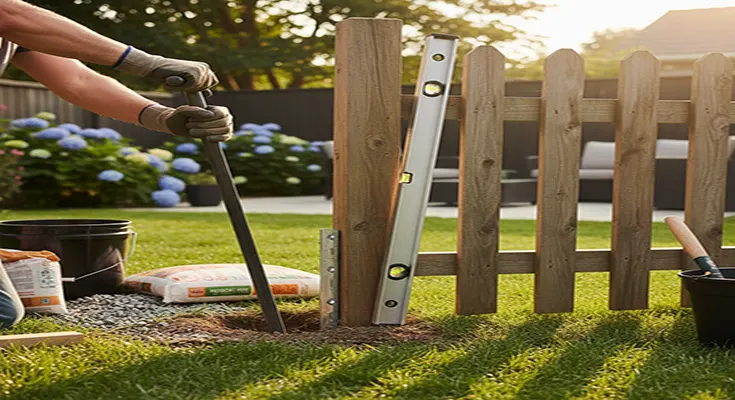
Quick Fixes for Wobbly Posts: How to Fix a Sagging Wooden Fence Post Without Replacement

Quick Fixes for Wobbly Posts: How to Fix a Sagging Wooden Fence Post Without Replacement

A sagging or wobbly fence post is a common headache for homeowners. This instability is usually caused by rot occurring right below the soil line where moisture collects, or by the surrounding concrete base crumbling. The good news is that you don’t always need to endure the heavy labor and expense of digging out and replacing the entire post.

For those looking for cost-effective, semi-permanent, and temporary solutions, here are three proven methods for how to fix a sagging wooden fence post without replacement.

Method 1: Shimming and Gravel (For Minor Wobble)

This is the easiest and fastest fix, best suited for posts that are loose within their existing concrete footing but show minimal to no actual rot.

  1. Dig a Collar: Carefully dig out the soil surrounding the top of the existing concrete base to create a small, shallow collar.
  2. Shim the Gap: Insert concrete shims or small, flat
Quick Fixes for Wobbly Posts: How to Fix a Sagging Wooden Fence Post Without Replacement Read More